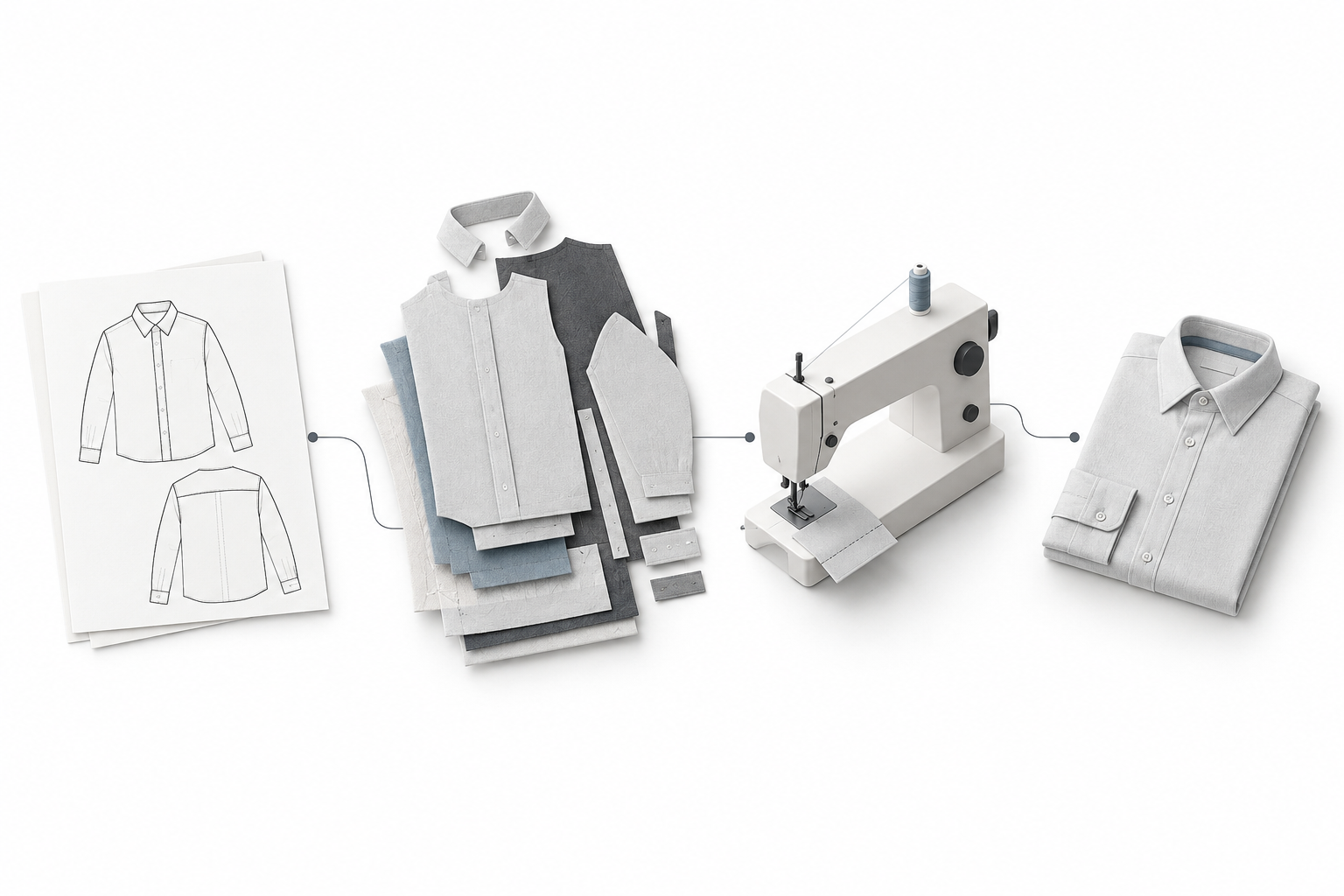
Cover: AI-generated conceptual illustration for WEFTSIGNAL, not documentary photography.
Start with the decisions, not the deadline
A garment order is easier to manage when the team can identify what must be decided before the next operation begins. A shipment date describes the desired outcome. It does not explain whether materials, technical instructions and approvals are ready. This explainer proposes a workflow review for buyers and production teams; it is not a universal factory operating procedure.
Define the product before measuring progress
Create one controlled reference for the current specification, approved sample, measurement method, materials and packing instructions. Record which version is approved and who can authorize changes. An attractive sample does not answer every production question: the team still needs to resolve construction details, size requirements and acceptable variation. Record open issues explicitly rather than assuming that silence means approval.
Treat handoffs as control points
A useful working sequence is development and approval, material readiness, cutting, assembly, finishing, inspection and release. Real operations can overlap or use different routes. At each handoff, ask three questions: what input is needed, what evidence confirms it is ready, and who accepts responsibility for the next stage? If one answer is missing, a progress percentage can conceal the uncertainty.
Measure the constraint
CBI’s factory-efficiency guidance discusses workflow, training, quality control and management as connected improvement areas. That supports looking beyond a single operation’s speed. As an editorial planning exercise, compare where work waits, where defects recur and where instructions change. A faster sewing operation may not improve shipment readiness if the next process cannot absorb the output.
A compact review for the next order
Use a decision log with the requirement, owner, evidence, due date and current exception. Separate approved changes from unresolved requests. When a date moves, record the cause and the affected downstream decisions. The purpose is to make assumptions visible before they turn into rework. A factory should adapt this framework to its products, workforce, equipment and contractual obligations.
Separate status from permission to proceed
A status such as “fabric received” is useful, but it leaves several decisions unanswered. Has the material been identified against the order? Is the approved reference available to the cutting team? Are there exceptions that affect only part of the quantity? In a working production tracker, give physical progress and permission to proceed separate fields. Otherwise, a finished activity can be mistaken for approval of the next one.
Use three distinct states for an approval: accepted, accepted with a stated condition, or unresolved. Describe the condition in plain language and name the person responsible for checking it. A conditional approval should not become a general authorization when the instruction is forwarded to another department.
An illustrative late-change review
Consider a hypothetical order in which a pocket measurement changes after cutting instructions have been issued. The useful response is not simply to replace the drawing. First identify which revision each team has received and which quantities have already passed the affected operation. Then ask whether the change concerns uncut material, cut panels, assembled garments or all three.
The decision record can describe the affected quantity, the proposed treatment, the person authorizing it and the evidence needed before work resumes. It should also identify any related sample, measurement sheet or packing instruction that requires revision. This example illustrates information control; it does not prescribe how a particular garment should be altered.
Questions for a production handoff
- Reference: Can the receiving team identify the approved specification and sample without searching through conflicting messages?
- Readiness: Which materials, instructions or approvals are missing, and which operations depend on them?
- Exceptions: Are any quantities held, substituted or awaiting a decision?
- Responsibility: Who accepts the handoff, and what evidence will show that the next stage is complete?
What a useful progress update contains
Report the planned milestone, actual status, affected quantity and next decision together. If work is waiting, name the missing input rather than describing the whole order as “in production.” This makes an update useful to both the buyer and the factory. Connect the review to the wider supply chain and the agreed quality controls, rather than treating production as a series of isolated percentages.
Source and further reading
CBI — factory efficiency guidance. Source consulted 15 October 2026. The working checklists in this explainer are WEFTSIGNAL editorial frameworks; they are not presented as requirements issued by the source organization.
Continue exploring manufacturing coverage and our editorial standards.