
Case study and disclosure. WEFTSIGNAL's operator also works on NOVITA's digital marketing. NOVITA requested this article. The inspection and shipment details come from NOVITA's published production account.
Cover illustration generated with AI for WEFTSIGNAL.
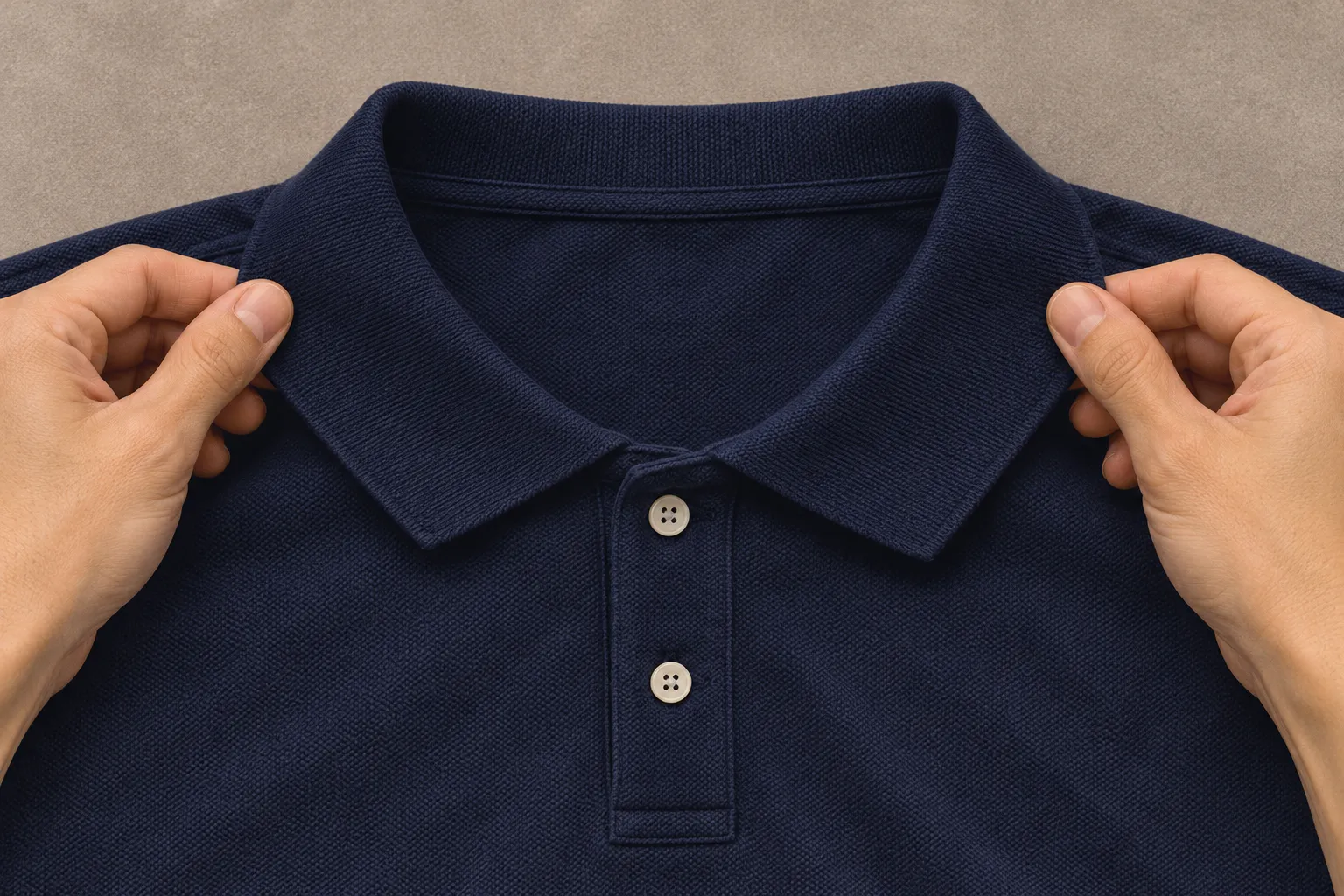
In NOVITA's account of a September 2026 inspection, the collar on a private-label activewear polo looked acceptable while the shirt lay flat. An inspector stretched the neck opening and released it. The collar showed incomplete recovery. NOVITA's quality-control team held the order for corrective work and a second inspection. NOVITA production case
What the inspectors rechecked
NOVITA reports that the inspector held both sides of the neck opening, pulled outward and watched the collar after release. The team checked the full order and identified the garments that needed correction. The factory adjusted the collar's knit structure and density, then returned the affected garments for reinspection.
On repeat inspection, the corrected collars returned to shape. NOVITA reports that the team released the order and the shipment stayed on schedule. The result applies to both knit changes together and comes from observing the collar after a hand stretch. Measuring elasticity with an instrument or assessing performance after repeated washing or wear requires separate testing. Our guide to garment inspection and textile testing explains what each can verify.
How to approve a collar on the sample
Start with the physical polo sample and its specification sheet. The collar type, the shape of the tips and the way the collar sits around the neck are all easier to discuss with that garment in hand. Close the front placket and look at the collar on the table and on a person or fit form. Record the sample version so the factory and buyer can return to the same reference.
If recovery matters to the design, demonstrate the stretch-and-release check on the approved sample. Agree where to hold the collar, how far to extend it and when to observe its shape after release. A short video showing the opening before the pull and after release can give the inspector a reference for the motion and the expected return. Use an agreed care trial for wash appearance or dimensional stability when the product requires it. Record the care conditions and the assessment separately from the hand check. NOVITA collar and placket inspection guide
What to put in the inspection brief
The inspection brief can carry a short set of instructions for this one feature. Write them while the sample is available, when the buyer and factory can agree on the appearance and feel they expect to see again in bulk.
- Approved reference. Record the polo style, sample revision and the matching collar specification. Attach a photo or clip of the approved collar in its resting position.
- Recovery check. Record the handling agreed at sampling and the appearance expected after release. Specify how many units to check and which sizes or lots the inspection should cover.
- Rework and release. If a collar fails the agreed check, record the affected quantity and what changed. Repeat the same procedure on the corrected pieces and document who cleared the order for shipment.
Ask for the release note to identify the inspected production lot, the finding and the recheck result. Keeping the approved sample reference with that note gives the buyer and factory a record to consult on a reorder.
